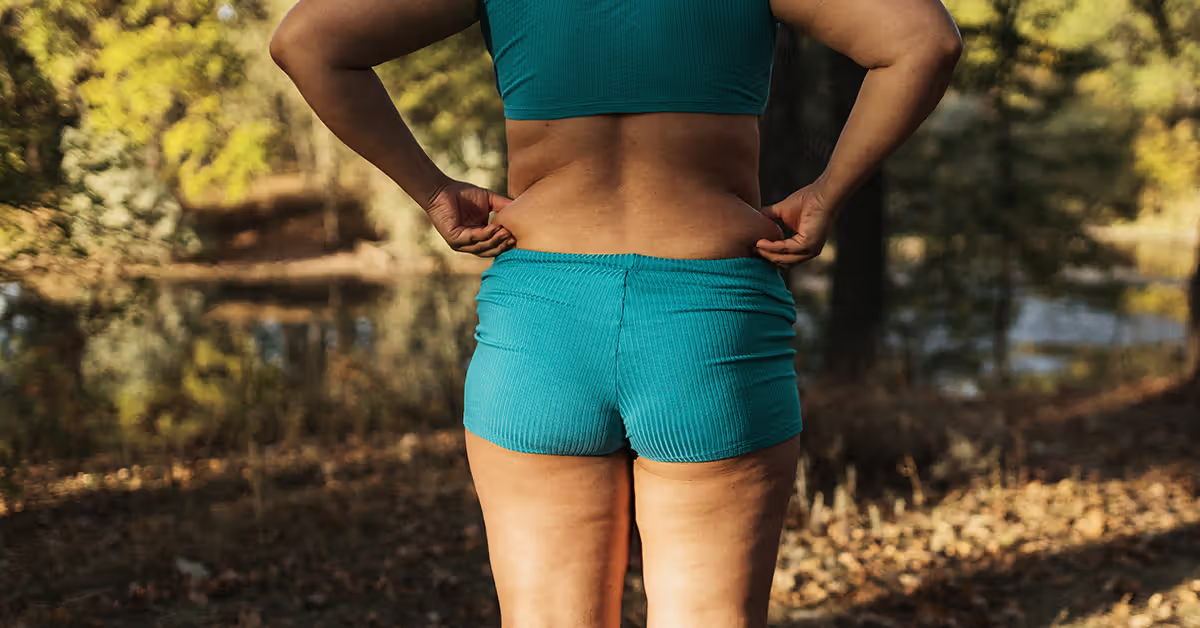
You’ve been dieting for months. The scale shows you’re down 20 pounds. Your arms are vascular, your face is lean, and you can see abs forming. But those love handles? They’re still there, mocking your efforts. This frustrating phenomenon is more common than you might think, and it has a physiological explanation.
If you’ve ever wondered how to get rid of love handles that persist even as other areas lean out dramatically, you’re dealing with what’s commonly called “stubborn fat.” Understanding the science behind this phenomenon can help you finally break through.
The Alpha-2 Receptor Problem
Fat cells aren’t uniform throughout your body. While they all perform the same basic function-storing and releasing fatty acids-they differ in their responsiveness to signals that trigger fat release.
When your body needs energy from stored fat, it releases catecholamines (primarily adrenaline and noradrenaline). These hormones bind to receptors on fat cells. The type of receptor determines the response:
Beta receptors (β1, β2, β3): When catecholamines bind to these receptors, they stimulate lipolysis-the breakdown of stored fat into fatty acids that can be released into the bloodstream and burned for energy.
Alpha-2 receptors (α2): When catecholamines bind to these receptors, they inhibit lipolysis-essentially telling the fat cell to hold onto its contents.
Different body regions have different ratios of these receptors. Fat cells in your love handles and lower abdomen have a higher concentration of alpha-2 receptors compared to fat cells in your arms, upper back, or face. This receptor distribution is largely genetic and explains why fat loss follows a predictable pattern: easy areas first, stubborn areas last.
The Blood Flow Factor
Even if fat is successfully mobilized from stubborn areas, it faces another hurdle: transportation. Fatty acids released from fat cells must travel through the bloodstream to reach muscles or other tissues where they can be oxidized (burned) for energy.
Research shows that stubborn fat regions typically have reduced blood flow compared to less stubborn areas. This creates a bottleneck-even when fat is mobilized, it has fewer opportunities to actually leave the area and be utilized.
This blood flow issue is partly why exercise that increases circulation throughout the body may offer modest benefits for stubborn fat areas. It’s also why some practitioners recommend training fasted in the morning, when catecholamine levels are naturally elevated and blood flow to stubborn areas may be relatively better.
Insulin’s Role
Insulin is a powerful inhibitor of lipolysis. When insulin levels are elevated-which occurs after eating, particularly after consuming carbohydrates-fat mobilization essentially shuts down regardless of receptor type.
For stubborn fat areas that already resist mobilization due to alpha-2 dominance, elevated insulin makes accessing these stores even more difficult. This is one rationale behind strategies like intermittent fasting and low-carbohydrate diets for stubborn fat-both approaches keep insulin levels lower for longer periods.
However, this doesn’t mean insulin is “bad” or that you need extreme measures. It simply means that spending some portion of your day in a low-insulin state may modestly improve access to stubborn fat stores.
Why “Getting Leaner” Isn’t Always Linear
Many people expect fat loss to occur uniformly across their body. Reality is quite different. You might lose 10 pounds and see dramatic changes in your face, arms, and upper body while your love handles barely budge. Then you might lose another 5 pounds and suddenly see significant love handle reduction.
This non-linear pattern occurs because your body essentially works through its fat stores in order of accessibility. Once the “easier” fat is largely depleted, it has no choice but to tap into the stubborn reserves-but this typically happens at lower overall body fat percentages.
For men, love handles often don’t show significant reduction until approaching 12-14% body fat. For women, this threshold is typically around 20-22%. These aren’t hard rules-genetics create individual variation-but they represent common patterns.
Strategies That May Help
While you can’t fundamentally change your receptor distribution, certain strategies may modestly improve your body’s ability to access stubborn fat:
Fasted Training
Training in a fasted state keeps insulin low and catecholamines elevated. Some research suggests this may improve fatty acid mobilization from stubborn areas. However, the benefit is likely modest and must be weighed against potential performance decrements from training without fuel.
Intermittent Fasting
Extended periods of fasting naturally lower insulin and may improve access to stubborn fat stores. The 16:8 protocol (16 hours fasting, 8-hour eating window) is a common approach that many find sustainable.
Yohimbine
This compound is an alpha-2 receptor antagonist-meaning it blocks alpha-2 receptors, potentially allowing better fat mobilization from stubborn areas. Research shows modest effects, but it only works in a fasted state and can cause side effects including anxiety and elevated heart rate. Not recommended for those with anxiety disorders or cardiovascular issues.
High-Intensity Interval Training
HIIT produces significant catecholamine release and may improve blood flow to stubborn areas. The combination of elevated catecholamines and improved circulation could theoretically enhance stubborn fat mobilization.
Patience and Consistency
The most effective strategy isn’t a strategy at all-it’s simply continuing what you’re doing until your body finally accesses those stubborn stores. If you’re in a caloric deficit and resistance training, your love handles will eventually shrink. The timeline is simply longer than other areas.
What Not to Do
Don’t crash diet: Extreme restriction often backfires, causing muscle loss and metabolic adaptation that makes continued fat loss more difficult. The love handles may be last to go, but they’ll never go if you abandon your approach.
Don’t do endless oblique exercises: Spot reduction doesn’t work. Building oblique muscle under the fat doesn’t reduce the fat itself.
Don’t expect quick fixes: No supplement, exercise, or “hack” will make stubborn fat behave like non-stubborn fat. The physiology is what it is.
Realistic Expectations
If you’re at 18% body fat (men) or 28% (women) with prominent love handles, expect to need to reach approximately 12-14% (men) or 20-22% (women) before seeing dramatic reduction. At sustainable fat loss rates (0.5-1% body fat per week), this could mean 3-6 additional months of consistent effort beyond when you start to look “lean.”
This timeline isn’t meant to discourage you-it’s meant to prevent premature frustration. Many people abandon effective approaches because they expect love handle loss to match the rate of loss from other areas. Understanding that stubborn fat is genuinely different helps you maintain the consistency required for success.
Conclusion
Love handles that persist at lower body fat levels aren’t a sign of failure or that you’re doing something wrong. They’re a predictable outcome of alpha-2 receptor dominance and reduced blood flow in that region. Every person with love handles faces this challenge to varying degrees.
The solution isn’t a special exercise, supplement, or diet trick. It’s continued adherence to the fundamentals-caloric deficit, resistance training, adequate protein-until your body finally depletes its stubborn reserves. This requires patience, realistic expectations, and the understanding that stubborn fat, by definition, takes longer.
Stay consistent. Your love handles will eventually yield-they simply demand more persistence than the rest of your body fat.