

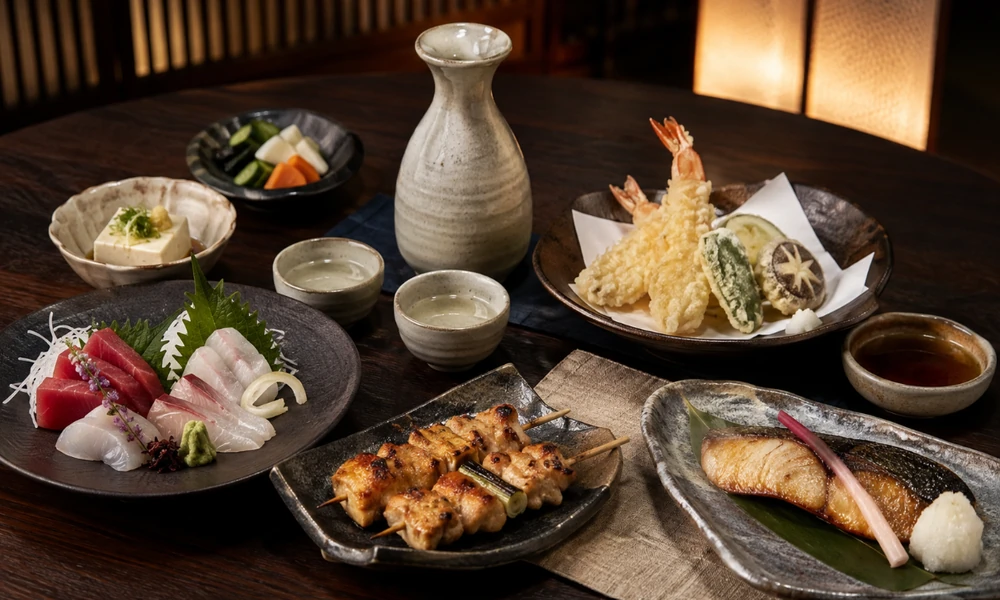
Japanese small plates can include delicate sashimi, crisp tempura, smoky grilled skewers, pickled vegetables, and deeply savory simmered dishes. Because these foods vary widely in flavor and texture, there is no single sake that pairs perfectly with all of them.
Successful pairing involves comparing the sake and the food according to acidity, body, aroma, sweetness, umami, and preparation method. The goal is not to overpower either one, but to create balance across the meal.
Use Acidity to Refresh the Palate
Sake with noticeable acidity can refresh the mouth after rich, salty, or fried foods. It may be particularly effective with tempura, fried tofu, grilled chicken skin, or small plates dressed with mayonnaise.
Acidity can also complement dishes seasoned with citrus, vinegar, or ponzu. However, an intensely acidic sake may seem sharp beside very delicate white fish or lightly seasoned tofu. For subtle foods, select a cleaner sake with moderate acidity and a gentle finish.
Higher acidity does not automatically mean better quality. It simply provides a different pairing tool.
Match the Body of the Sake to the Dish
Body describes the weight and texture of sake in the mouth. Light-bodied sake usually works well with delicate dishes such as sashimi, steamed seafood, chilled tofu, and simply dressed vegetables. Its restrained character allows subtle flavors to remain noticeable.
Fuller-bodied sake is better suited to richer foods, including braised pork, grilled eel, miso-marinated fish, mushrooms, and meat skewers. These dishes need enough weight in the beverage to prevent the sake from disappearing behind the food.
A useful rule is to pair light with light and rich with rich. Contrasting pairings can work, but matching intensity is a dependable starting point.
Consider Aroma Carefully
Some sake styles offer pronounced aromas of fruit, flowers, herbs, or fresh rice. Fragrant sake can complement mild seafood, lightly seasoned vegetables, or dishes with fresh garnishes. Fruity aromas may also create an appealing contrast with salty ingredients.
Strongly aromatic sake can compete with smoky, fermented, or heavily seasoned foods. For yakitori, miso dishes, or grilled fish, a more restrained aroma often allows the cooking method and savory flavors to take the lead.
Serve aromatic sake moderately chilled rather than extremely cold, since very low temperatures can mute its fragrance.
Balance Sweetness With Salt and Spice
A slightly sweet sake can soften salty, spicy, or intensely seasoned foods. It may pair well with sweet soy glazes, spicy sauces, teriyaki-style dishes, or savory-sweet braised meats.
Sweetness should be balanced carefully. Pairing a noticeably sweet sake with an already sweet dish can become heavy unless the beverage also has enough acidity. Drier sake is often easier to match with a broad range of small plates, particularly when the table includes seafood, vegetables, and fried foods.
Rather than relying only on labels such as “dry” or “sweet,” taste for the actual impression of sweetness and how it changes with food.
Build on Umami
Sake and Japanese cuisine often share strong umami characteristics. Amino acids in sake can connect naturally with ingredients such as mushrooms, soy sauce, miso, seaweed, aged fish, and dashi.
A rich, savory sake can deepen the flavors of grilled mushrooms, simmered vegetables, or miso-marinated seafood. However, combining several powerful umami elements may produce an overly intense pairing. Acidity, bitterness, fresh herbs, or pickled garnishes can provide contrast and keep the combination balanced.
Pair According to Preparation Method
Preparation often matters more than the main ingredient. Raw fish is generally compatible with clean, light sake, while grilled fish may suit a fuller, earthier style. Fried dishes benefit from acidity and a dry finish, whereas simmered foods can work with rounded sake that echoes their savory broth.
Smoked or charred plates usually need more body than steamed or chilled dishes. Warm sake may feel especially harmonious with grilled, braised, or simmered foods, while chilled sake commonly suits raw and refreshing preparations.
Taste and Adjust as You Go
When several plates are being shared, begin with a versatile, balanced sake and move from lighter to richer styles. Take a small sip, taste the food, and then sip again. Notice whether the pairing makes the dish seem fresher, richer, sweeter, or more savory.
Pairing sake with Japanese small plates is ultimately an exercise in balance. By considering acidity, body, aroma, sweetness, umami, and preparation, diners can build combinations that respect both the drink and the food.
This post was written by a professional at Fortu. Fortu stands out among the top Restaurants St Petersburg FL, offering an elevated Pan-Asian dining experience in the heart of St. Petersburg, Florida. Celebrating Asia’s vibrant and diverse culture, Fortu introduces bright and bold flavors to a bright and bold city with a menu of locally and sustainably sourced options, from small bites to hearty delicacies. Whether winding down from a beach day or celebrating a special occasion, guests can enjoy a lush, alluring atmosphere and an authentic taste of Asia’s divine cuisine at one of the finest Pan-Asian Restaurant In Downtown St Petersburg FL.